As I wrote a few years ago about the tug of war between Catalonia and Spain as well as the use of the Catalan and Spanish languages in this area, I thought I would give an update on the situation. Previous posts: catalonia2 and catalonia1
The independence movement in Catalonia has grown in the past year and just might have a majority, slightly over 50% of the people in favor of breaking away from Spain.
There are two types of secessionists in Catalonia: the nationalists and people who think independence would result in a better life.
The first group I mention is always more or less for Independence, 25% on a beautiful day, up to 35%+ on a bad rainy day. This is most likely the latter nowadays. Recent surveys have shown a paradox in the use of the Catalan language in the region. More people than ever (more than 90%) understand the language and can use it. Around 75% can also speak it. Besides more audio-visual material, be it books, translations, internet use, TV, movies, radio, has also increased dramatically in the last few years. However, on the flipside, actual daily use is down. People with Catalan as a mother tongue has decreased to a historic low, 35%, and it is said that more than 70% of conversations in Catalonia are in Spanish. Plus within Catalan, the use of a lighter version mixed with Spanish is also commonplace. As such linguistics predict that within the midterm future if nothing changes Catalan will not die, just melt into Spanish as a regional form of it.
In this atmosphere, the new government of Spain has striven to re-centralize the region. Since the Supreme court has made null and void most of the laws making Catalan the preferred language of Catalonia, they have pushed reform to reintroduce Spanish into the school system and set up a 50-50 quota between Catalan and Spanish in all areas. The idea they propose is simple: people should be able to use whenever they choose whichever of the official languages. In light of the studies, nationalists now believe that Catalan language and culture cannot survive without independence. This group also surmises that the central government actually aspires for it to die.
Besides language use, the Spanish rightist government of the Partido Popular has enacted many other laws to effectively undermine the large autonomy granted to the region in the 1990's. They aim to take backs rights given by previous administrations to Catalonia and other regions. The reason is the economic crisis the whole nation has been suffering since 2008. Apparently, there was a lot of corruption in autonomous areas where budgets were misused for grandiose projects and a frenzy of building that never ended up benefiting anyone. Laws became vastly different from one region to another. The politicians in one area or another were of different political nature and this added to a culture of mutual contempt and little desire for cooperation or harmonization in policies. At times shady deals between ministers and private companies and assumed embezzlement into Swiss bank acccounts were almost commonplace. Meanwhile the past central government turned a blind on this situation. Nowadays, however, fueled by the demands of Europe, Mariano Rajoy is striving to cut expenses drastically and abolish privileges that had come to be considered as rights of the people.
Catalonia, arguably the richest region in Spain, was hit hardest be the crisis. Many jobs in industry and service have been lost. Expenses here are at the highest. Promoting the Catalan language is expensive. Consider just the subsidies given to entities sponsoring the language as well as to the film industry to dub and subtitle movies for use in Catalonia. The social network is also more highly developed here than in the rest of Spain. The result was bankruptcy and a bailout by the Spanish government that was not unconditional. Cutbacks in Catalonia are the highest, re-centralization is de rigueur, and taxes have risen. Protests are frequent and the response of the Spanish government is "Too bad! Our way or the highway!"
The nationalists have promoted the idea that their nation has been invaded by Madrid, and is bleeding it dry. If Catalonia is suffering in spite of being the richest region and other regions in Spain aren't, the reason is simple. Spain has unfairly taken all their money through taxation and budget allowances, then unbelievably forces them to beg for a piece of it back, just so it can humiliate hardworking Catalans. And to boot, it insults their languages and revokes their inalienable rights to govern themselves as a people. Politicians show the new highway system in Madrid and the high speed rail linking Madrid, Valencia, Seville and Galicia as pilfering their money for others' comfort. Besides, other poorer regions have balanced their budgets in recent times despite their lack of industry and/or dependence on agriculture. All in all a percentage of non-nationalists have been convinced that Madrid is the enemy and that Catalonia could make it better alone if it didn't have to pay Spain tribute or be submitted to its laws. Even the idea that Spain hates Catalonia and has planned to kill it has made inroads. But, imagine the prosperity that freedom could bring!
At the present time a game of chicken is being played out. After Madrid refused to change its policy and offer Catalonia a new tax system it splitting resources, the nationalist leader Artur Mas called for new elections on an independence platform. Surprisingly he lost support but still managed to claim victory after forming a coalition government with other leftist, more radical secessionists. He has vowed not to comply with a number of the new Spanish laws, including the ones enforcing the use of Spanish or demanding more cutbacks and plans to hold a referendum on independence one way or another. Madrid, however, pledges to force him to comply. As per referendums, the Spanish constitutions forbids them and declares Spain to be united and loyal to its king. They will suspend autonomy and take direct control of the region if needed. This has already happened in the past in the Basque country, so it is not without precedent. Artur Mas, in the meantime, says he's up for a fight, in Spain, in Europe, in the Hague, at the UN, wherever. Using the metaphor of a ship, he states that it is better to fight the armada and lose then end up wrecked on the rocks.
Stay tuned for what happens next!
Showing posts with label Spain. Show all posts
Showing posts with label Spain. Show all posts
Wednesday, December 25, 2013


Tuesday, June 4, 2013
Thinking of you, Cáceres

Once in a while I remember you, Cáceres, and the memory is so vivid it transports me back decades. I'm in a time warp, flying magically over thousands of miles of scenery long forgotten. Presto. I'm back on Paseo de Cánovas sipping watermelon sangría as the af
 ternoon sun peaks its head over San Jorge cathedral.
What usually brings me back to you is the pungent smell of diesel fuel spewing from an old bus and blending ever gently with a distant scent of garlic and olive oil. Add the tune of some old bolero, and that's the recipe. I'm back on my journey on that Enatcar long haul carrier, destination Cáceres.
It was 1991; I was still wet behind the ears, both exhilarated and apprehensive as we rode deeper and deeper into the mysterious heart of Spain. The flat barren countryside went on for hours, dotted periodically with a sudden cluster of houses, a castle, a casino or two. The bus started and stopped with thuds as Spaniards in red jeans and black leather jackets hopped on and off at villages with grandiose baroque sounding names... Talavera de la Reina, Quintanar de la Vega, Arroyo de la Luz. On the radio, Cadena Dial played long bittersweet ballads of love forlorn. They came in and out with static as we grew ever farther from that fading signal in Madrid. "Me dijiiiste que me queríias... ......pero todo fue mentiiiiira. (You said you loved me.... but all that was a lie). Then a flood of guitar music and repeat, repeat, repeat ad infinitum... Finally, after we struggled to climb up a rugged hilltop, I could see the medieval city of white washed houses and red tiled roofs
 stretched out before us in the valley. Next stop, Cáceres! Just let it happen.
María Dolores met me as I got off the bus with a "Wow, Vikings do exist, don't they?" and promptly rechristened me as Roncho, short for Roncho el Grande, my Spanish alter ego... well, some remote play on words between my name and a Visigoth king who resembled me. It stuck. That was the only time I remember being greeted with such gusto from a stranger and actually
 seeing one of those arrival "welcome signs" with my name scratched on it in huge letters. Ok, so it WAS misspelled with several strange H's placed at random, but I could clearly recognize it. My head still spinning from the journey, I felt lost as anyone could be in the world. We watched the 1950 Pullman take off toward Seville, and we both burst out laughing. Diesel was now garlic.
Cáceres is a blur of souvenirs with no beginning nor end, where evening started at noon or rather nights lingered on well into the afternoon. The Spanish literature prof spoke of the Libro de Buen Amor for months on end, the geography prof insisted on the olive grove giving birth to Iberian civilization. The frequent breaks at the bar may have been longer than class time. The morning pick me up was a small insanely strong espress o diluted into a tall glass of rum. The waiter played "Camino" over and over. That was the only place I ever did a back flip or even attempted to. Cáceres gave courage to a push ones limit. The student strike was a welcome festive atmosphere. We marched round and round the city with banners reading "No Spanish blood for oil"! Didn't matter no one knew what the march was about. Did we need an excuse to be rowdy? In the meantime, we partook of tapa after tapa, lots of exotic fish, omelettes, spicy peppers and sharp sheep cheese washed down with gallons of sweet Spanish wine so thick it was like syrup. Of course, every day we had madalenas galore, not to mention the ever-present Galletas Fontaneda. Those crackers tended to show up everywhere. There were the nights the Canary Island girls danced on the bar of Montana with their own cosmic fandango choreography to the B52's "Lov Sack". There were the gypsies sitting on the steps to the old town strumming their guitars "Si tú me dices ven, lo dejo todo" (Just say the word and I'll leave it all for you). I see myself dressed as Pancho Villa for carnival, jumping on human chairs and chanting "un, dos, tres". In a dive decked out all in red, known to locals as the Leaning Tower of Babel, I translated Montse's favorite song for her "If I said you had a beautiful body would you hold it against me?" to which she surprisingly retorted, "I've been waiting for you to say that all night. Now what?" So was that her I accompanied back to the convent for her 6am curfew or was it Inés, the blonde who asked me for every possible way in English to translate the maneuvers she liked do with her long mane of hair? Braid it, pull it back, curl it, tease it, tweeze it, gel it.
  Haze. I then see myself with a group of people on a farm applauding a gory pig slaughter, and watching them pour the blood into vats of steaming potatoes. What a local delicacy indeed!
I met wannabe bullfighters at a novillada in Cabeza del Buey and poets who weren't aware the golden age had ever come to an end. Amazingly every town, every street, every house seemed to be famous or infamous for some reason or another. They would say... "that's where Ana Pérez's brother's sister-in-law was murdered. She still roams around there on some evenings crying revenge." Yeah, uncanny, but in Extremadura I do have to believe everything. At some point in time, I went to a parent teacher's conference for the six-year-old in the house, played bocce on a rooftop, had party after party, woke up in strange apartments, and went to a wedding of a couple I didn't even know existed. Time rolled by in Cáceres like in a David Lynch film. Before you knew it you were appearing in Chinese restaurants, at the bullring for a quick faena, at a poetry reading, on the balcony of some loft, or chilling and watching Pretty Woman dubbed into Spanish. "Guay, guay" said Julia Roberts. It's either quite magical or a sign of distress when Friday becomes Tuesday and Monday morning is always the beginning of something extra special. In Cáceres, someone's always ready to meet you at the clock tower for a whirl around town. The anecdotes come back when I least expect it like a tap on my shoulder. "Whatever happens, just remember, man. Nothing better in life than pissing a good ale".
 o diluted into a tall glass of rum. The waiter played "Camino" over and over. That was the only place I ever did a back flip or even attempted to. Cáceres gave courage to a push ones limit. The student strike was a welcome festive atmosphere. We marched round and round the city with banners reading "No Spanish blood for oil"! Didn't matter no one knew what the march was about. Did we need an excuse to be rowdy? In the meantime, we partook of tapa after tapa, lots of exotic fish, omelettes, spicy peppers and sharp sheep cheese washed down with gallons of sweet Spanish wine so thick it was like syrup. Of course, every day we had madalenas galore, not to mention the ever-present Galletas Fontaneda. Those crackers tended to show up everywhere. There were the nights the Canary Island girls danced on the bar of Montana with their own cosmic fandango choreography to the B52's "Lov Sack". There were the gypsies sitting on the steps to the old town strumming their guitars "Si tú me dices ven, lo dejo todo" (Just say the word and I'll leave it all for you). I see myself dressed as Pancho Villa for carnival, jumping on human chairs and chanting "un, dos, tres". In a dive decked out all in red, known to locals as the Leaning Tower of Babel, I translated Montse's favorite song for her "If I said you had a beautiful body would you hold it against me?" to which she surprisingly retorted, "I've been waiting for you to say that all night. Now what?" So was that her I accompanied back to the convent for her 6am curfew or was it Inés, the blonde who asked me for every possible way in English to translate the maneuvers she liked do with her long mane of hair? Braid it, pull it back, curl it, tease it, tweeze it, gel it. Haze. I then see myself with a group of people on a farm applauding a gory pig slaughter, and watching them pour the blood into vats of steaming potatoes. What a local delicacy indeed!
I met wannabe bullfighters at a novillada in Cabeza del Buey and poets who weren't aware the golden age had ever come to an end. Amazingly every town, every street, every house seemed to be famous or infamous for some reason or another. They would say... "that's where Ana Pérez's brother's sister-in-law was murdered. She still roams around there on some evenings crying revenge." Yeah, uncanny, but in Extremadura I do have to believe everything. At some point in time, I went to a parent teacher's conference for the six-year-old in the house, played bocce on a rooftop, had party after party, woke up in strange apartments, and went to a wedding of a couple I didn't even know existed. Time rolled by in Cáceres like in a David Lynch film. Before you knew it you were appearing in Chinese restaurants, at the bullring for a quick faena, at a poetry reading, on the balcony of some loft, or chilling and watching Pretty Woman dubbed into Spanish. "Guay, guay" said Julia Roberts. It's either quite magical or a sign of distress when Friday becomes Tuesday and Monday morning is always the beginning of something extra special. In Cáceres, someone's always ready to meet you at the clock tower for a whirl around town. The anecdotes come back when I least expect it like a tap on my shoulder. "Whatever happens, just remember, man. Nothing better in life than pissing a good ale".

Cáceres is like a slideshow image of old pictures projecting onto the wall in any old order without rhyme nor reason. My stay came to an abrupt end the following June. Though the departure day had actually been planned long before I even arrived, I found myself throwing my clothes frantically into my suitcase an hour before the bus was to leave. Why was I at Sala Capitol till the last minute? I definitely wasn't ready to leave, yet I had used up six of my lives there. I didn't even bother to say good-bye to anyone. I wasn't sure at that point if tomorrow wouldn't be just another stroll from the Uni to the Plaza Mayor up the street and to that new home of mine I seldom stayed in for more than a few hours at a time. Lola drove me to the bus station, kissed me affectionately on both cheeks and pronounced the famous farewell saying of spaniards. "A ver si nos vemos, Roncho". (I guess I'll be seeing you sometime). Thus, I got on that rickety old bus. The same old driver took a victory lap around town and then I was gone. My carnavalesque experience was over and I never went back.

Sunday, December 25, 2011
Caganers and Cagatíos for Christmas!
Looking for a new eclectic Christmas tradition. Try celebrating the holiday the Catalan way by getting a caganer and a cagatío (sh*tter and uncle sh*t). So what is this scatalogical tradition about, you say puzzled? Well, the Catalans place the first figure in their nativity scene and the second one under their tree.


The caganer is an important part of their crèche scene. He is placed in the corner all the way to the left or to the right and far behind the main action featuring the madonna and child and three magi kings, so as to be as discreet as possible. The figure (el caganer) has his pants down, is depicted bent over and defecating. The action is seen clearly. Apparently this addition to the nativity came about originally in the Catalan farming community. You had to have one to ensure a profitable crop the following year. Later on, the caganer spread throughout Catalunya. In families, move it's precise location daily and children have fun trying to find the spot where he is hiding. Nowadays the caganer is actually famous people, including Queen Elizabeth II or Barack Obama in recent years.
The Caga Tío is more recent and a family ritual in Catalunya. It is the form of a log and goes under the Christmas tree. On Christmas, the children crowd around the Uncle/Log who proceeds to sh*t sweets, chocolates, candies and many other little gifts for their delight. Sometimes kids also hit it with a stick piñata style to get it to defecate quicker. This tradition is a must for all Catalan families. Perhaps you might want to consider adopting it?


The caganer is an important part of their crèche scene. He is placed in the corner all the way to the left or to the right and far behind the main action featuring the madonna and child and three magi kings, so as to be as discreet as possible. The figure (el caganer) has his pants down, is depicted bent over and defecating. The action is seen clearly. Apparently this addition to the nativity came about originally in the Catalan farming community. You had to have one to ensure a profitable crop the following year. Later on, the caganer spread throughout Catalunya. In families, move it's precise location daily and children have fun trying to find the spot where he is hiding. Nowadays the caganer is actually famous people, including Queen Elizabeth II or Barack Obama in recent years.
The Caga Tío is more recent and a family ritual in Catalunya. It is the form of a log and goes under the Christmas tree. On Christmas, the children crowd around the Uncle/Log who proceeds to sh*t sweets, chocolates, candies and many other little gifts for their delight. Sometimes kids also hit it with a stick piñata style to get it to defecate quicker. This tradition is a must for all Catalan families. Perhaps you might want to consider adopting it?


Saturday, September 3, 2011


Friday, September 2, 2011
Photos de Barcelona 1
Some memorable photos from my trip to Barcelona (July 31-August 15)
First two pictures are me in the Parque de la Ciutadella

 Me at the fountain on the Plaza Real

Me in an inner courtyard of a former monestary now an art center for the University of Barcelona.
 This summer in Barcelona, there is an exhibition going on: Barcelona back then. They take old photos, blow them up huge (as you see here on the Plaza San Jaime near the cathedral) and put them on the street so you can stand behind them for an odd effect of old superimposed on new. It's better to be there. Right here is a motorcade process with Generalíssimo Franco in the 1960's.
 View of the Eixemple neighborhood from the Plaza de Cataluña.

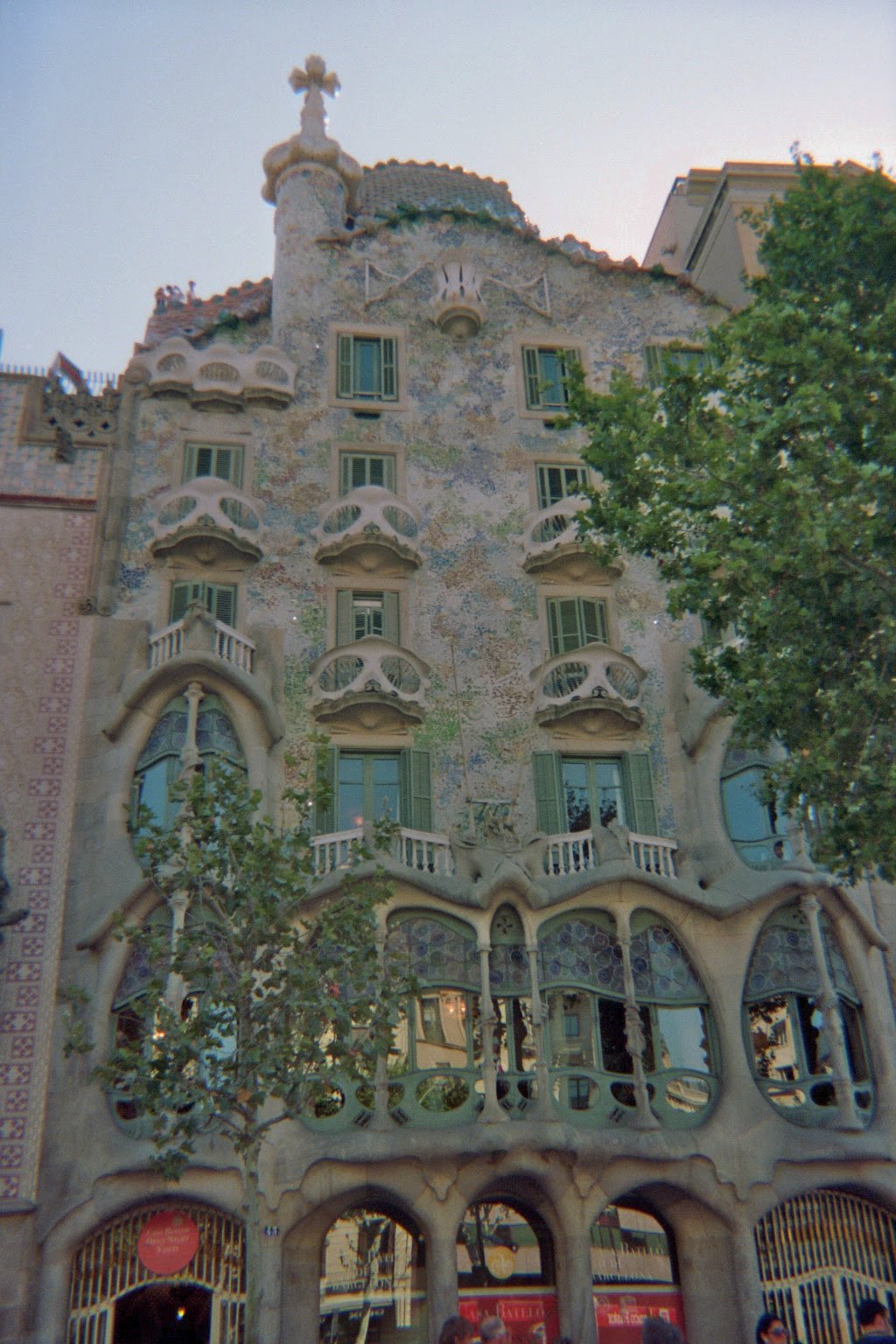
The next two photos are in the Eixemple on Manzana de la Discordia, a block where there are several famous modernist buildings by Antoni Gaudí, of which Casa Batlló and Casa Amatller.


First two pictures are me in the Parque de la Ciutadella
 Me at the fountain on the Plaza Real
Me in an inner courtyard of a former monestary now an art center for the University of Barcelona.
 This summer in Barcelona, there is an exhibition going on: Barcelona back then. They take old photos, blow them up huge (as you see here on the Plaza San Jaime near the cathedral) and put them on the street so you can stand behind them for an odd effect of old superimposed on new. It's better to be there. Right here is a motorcade process with Generalíssimo Franco in the 1960's.
  View of the Eixemple neighborhood from the Plaza de Cataluña.
The next two photos are in the Eixemple on Manzana de la Discordia, a block where there are several famous modernist buildings by Antoni Gaudí, of which Casa Batlló and Casa Amatller.

Wednesday, August 31, 2011
Barcelona

Barcelona is a magnificent town well worth the visit, both for quality and price. Avoid the tourist traps like the downtown area near the Ramblas and the Plaza de Cataluña. 90% of all tourists go, stay and lodge there. The only thing you'll find there are high prices, plastic souvenirs, postcards, people begging for money, and hordes of tourists from everywhere taking pictures. No natives at all! Go far away, my pick is the neighborhood called Gracia and anything beyond in the Zona Alta or so called High Neighborhoods since as you get away from downtown you are going uphill. Here, you've got paradise, only smiling natives eager to get to know you and talk to you. Also theaters, cinemas, outdoor concerts, green parks, cheap restaurants with menú del días (starter, main course, dessert and wine) for 10 euros! There is a slow feeling to these areas as you kick back, have a sangria, take a walk, explore the farmers' markets, old bookshops. In Gracia you've got it all. As its name suggests, it has been touched by the "grace of God". By the way, real seasoned travellers to Barcelona know that you have to rent an apartment, not a hotel room. For as little as 500 euros for two weeks you can have a two bedroom apartment with equipped kitchen, bath, living room, dining room and balcony!
Yes, my friend, go up up up, to San Gervasio and Sarriá, these are the trendy new spots with hot clubs, cafés and restaurants. You'll feel a hundred miles away from that raucous port.
Top 10 list
1. Puerta del Sol, Plaza del Diamante, and other squares in Gracia
2. Parque Güell, take subway all the way up to the top and walk down
3. Take the train up San Gervasio, and then up to the top Mt. Tibidabo
4. El carrer mayor de Sarriá. Hang out there in the evening
5. The mansions on Calle Pedralbes. Walk down from the top of the hill
6. Pabellón de Gaudí, Calle Pedralbes at the bottom of the hill
7. Take a regional train to Sitges del Mar, the most beautiful beach town.
8. Check out the Gaudí houses on Paseo de Gracia (Sat. best)
9. Hang out in El Borne in the evening, the gentrified ghetto with swanky cafés and shops.
10. See a zarzuela concert at El Palau de la Música Catalana and check out the Gaudí architecture and frescos.
Personally, I'd avoid the Barceloneta and its spoiled beaches, Montjuich and its spoiled beauty and overrated museums, the Barrio Gótico during the day, the Picasso musuem (kind of small for the price), also the Sagrada Familia until its more finished. For now it's a noisy construction zone filled with tourists, cranes and policemen. Totally overrated. And get away from those Ramblas
Yes, my friend, go up up up, to San Gervasio and Sarriá, these are the trendy new spots with hot clubs, cafés and restaurants. You'll feel a hundred miles away from that raucous port.
Top 10 list
1. Puerta del Sol, Plaza del Diamante, and other squares in Gracia
2. Parque Güell, take subway all the way up to the top and walk down
3. Take the train up San Gervasio, and then up to the top Mt. Tibidabo
4. El carrer mayor de Sarriá. Hang out there in the evening
5. The mansions on Calle Pedralbes. Walk down from the top of the hill
6. Pabellón de Gaudí, Calle Pedralbes at the bottom of the hill
7. Take a regional train to Sitges del Mar, the most beautiful beach town.
8. Check out the Gaudí houses on Paseo de Gracia (Sat. best)
9. Hang out in El Borne in the evening, the gentrified ghetto with swanky cafés and shops.
10. See a zarzuela concert at El Palau de la Música Catalana and check out the Gaudí architecture and frescos.
Personally, I'd avoid the Barceloneta and its spoiled beaches, Montjuich and its spoiled beauty and overrated museums, the Barrio Gótico during the day, the Picasso musuem (kind of small for the price), also the Sagrada Familia until its more finished. For now it's a noisy construction zone filled with tourists, cranes and policemen. Totally overrated. And get away from those Ramblas
Tuesday, August 23, 2011
Catalan is not preferential 2
Update:
On the street in Barcelona Spanish is the lingua franca. This is now true even in the historic Catalan neighborhoods like Gracia and Sarrià. Spanish now has the advantage despite the afforementioned laws enforcing/imposing Catalan in the government, the public and private sectors, the media and public schooling. Most of the people in Barcelona are not driven by nationalism, language or culture more than in any other city in Spain. There is ambivalence to speaking in Catalan or Spanish. I heard quite often "lo mismo da", more or less "who cares". This of course is in stark contrast to the regional parliament that promotes rigourously the language and independence of Catalonia.
As for TV, there are at least 10 spanish channels for 1 catalan. Pretty much the same for the press, books, films, video games and music.... The reason is simple: they come into Catalunya from Madrid, where there is, of course, no language rules or quotas.
All in all I have mixed feelings, indeed. I celebrate the openness of the Catalan people, the visible lack of nationalism, the solidarity with the rest of Spain, and the continued use of Spanish. I was fearing a very different scenario. However, I am sad that Catalan continues to decline. I love Catalan and speak it pretty fluently. I can certainly see how its use is diminishing. I'm sure this is the reason for the rigid laws they have passed and the calls for independence by the nationalists in parliament. This is obviously the wrong way to promote Catalan. Outside Catalonia, Catalan is seen as the agressor. In Barcelona, it also contributes to the creation of this atmosphere of "Catalan, Spanish, whatever!" In reality, there is a serious threat to Catalan's survival. A recent survey indicated that only 33% speak it daily. Find another way. Strong arming has failed.
Rontay Merquiades
On the street in Barcelona Spanish is the lingua franca. This is now true even in the historic Catalan neighborhoods like Gracia and Sarrià. Spanish now has the advantage despite the afforementioned laws enforcing/imposing Catalan in the government, the public and private sectors, the media and public schooling. Most of the people in Barcelona are not driven by nationalism, language or culture more than in any other city in Spain. There is ambivalence to speaking in Catalan or Spanish. I heard quite often "lo mismo da", more or less "who cares". This of course is in stark contrast to the regional parliament that promotes rigourously the language and independence of Catalonia.
As for TV, there are at least 10 spanish channels for 1 catalan. Pretty much the same for the press, books, films, video games and music.... The reason is simple: they come into Catalunya from Madrid, where there is, of course, no language rules or quotas.
All in all I have mixed feelings, indeed. I celebrate the openness of the Catalan people, the visible lack of nationalism, the solidarity with the rest of Spain, and the continued use of Spanish. I was fearing a very different scenario. However, I am sad that Catalan continues to decline. I love Catalan and speak it pretty fluently. I can certainly see how its use is diminishing. I'm sure this is the reason for the rigid laws they have passed and the calls for independence by the nationalists in parliament. This is obviously the wrong way to promote Catalan. Outside Catalonia, Catalan is seen as the agressor. In Barcelona, it also contributes to the creation of this atmosphere of "Catalan, Spanish, whatever!" In reality, there is a serious threat to Catalan's survival. A recent survey indicated that only 33% speak it daily. Find another way. Strong arming has failed.
Rontay Merquiades
Wednesday, June 29, 2011
Catalan is not preferential


The complex love and hate relationship between Catalonia and Madrid has existed for centuries. Madrid represents Spanish language, Castilian culture, central goverment, old-fashioned magistrates, congress, business, and any type of regulation or central control. Madrid is in the exact geographic center of Spain (kilometer 0) from which all distances are measured. In short, for a Catalan nationalist, it's everything that holds Catalonia back and keeps it in check. Madrid is that lead weight that keeps Catalonia and the Catalan people from excelling. The parent with that strong hand! Of course, as with any type of nationalism, their ideas are debatable and completely subjective. Outside Catalonia, Catalans (the nationalists) are seen as cry babies, marginalized victims of nothing, knit pickers, people who say "no" when everyone else says "yes" and viceversa... all just to create chaos whenever and wherever possible, and of course, to be different. Now, truth be told, and I have thought about this for quite a long time, both sides are right. Madrid is insensitive and Catalonia/ Barcelona is often a bit senseless.
The twentieth century was not kind to Catalans. Two brutal dictators (with a civil war between them) targeted the catalans as subversive and worked hard to break their will and destroy their language and culture. For example, two anecdotes... the famous architect, Antoni Gaudi, was arrested and jailed for speaking Catalan in public and if children spoke Catalan in school they were told they were "barking like dogs" and punished. No way to overstate this people's suffering up until 1975, when democracy returned to Spain after a long absence. A legacy remains though: immigration was encouraged from other regions (nowadays countries worldwide)and ethnic Catalans became a minority in the cities. For example, 55% of Barcelona's population do not have Catalan origins. Needless to say, it's as common to dance flamenco as sardanas, eat tortilla as butifarra, and more conversations are in Castilian Spanish than Catalan.
Democracy brought back autonomy, a renaissance in Catalan culture and language occurred. Who hasn't heard of the artistic marvels in Catalonia! Similarly there is a thriving theater, literature, and music scene. Catalonia slowly but surely has won more and more autonomy from Madrid, especially during the 4 term reign of the legendary Catalan nationalist Jordi Pujol. As the legend says, give an inch take a mile, give an inch take another mile. The policy of favoring Catalan also intensified. The regional government justified imposing Catalan in the following way: Simple bilingualism favors Castilian as people feel they can choose freely one language and completely ignore the other. In the long run, Catalan cannot compete with a world language like Spanish and would have a slow bitter death due to bilingualism. Moreover, Catalan is only spoken in Catalonia, so if it's not favored there, where will it be? Therefore, Catalan has become the de-facto sole official language of Catalonia (even though officially the constitution stipulates it is co-official with Castilian Spanish). All schooling, street signs, government deliberations and publications, public services, tv, radio, etc. are in Catalan. There are language policemen enforcing this policy and issue fines against businesses and individuals who do not use Catalan. The push toward Catalan has caught the attention of other Spanish regions and political parties, reporters, and some celebraties or writers who have denounced the Catalan language policy as discriminatory against other peoples in Spain. Also such a large autonomy in general is seen as a long-term threat to Spanish unity.
Well, today the Supreme Court in Madrid has bitten back and imposed limits to the regional government. It took them four long years to debate the Catalan statute, point by point, and they finally came to an agreement to what extent they should change it and/or sanction it. So, they corrected the Catalan statute ruling that "Catalan is the normal but definitely not preferential language of Catalonia". What does that mean and how will that change the language policy? I'd like to know! Likewise, the court stated 15 times that Spain was indivisible. Also that the symbols of Catalonia (flag, emblem, song) do not have anything but symbolic meaning. Moreover, Catalonia cannot be considered a nation but just a group of people living in Spain like Castilians, Andalusians, Aragonese etc. The judicial system will also be controlled directly from Madrid. All in all 14 articles of their statute were changed or abolished.
Look for the catalan nationalists to be in an uproar! They already felt they had compromised too much and that their autonomy was not large enough. Now, technically things should change, but I am not sure how???
Just one last observation if by chance someone is reading this post, ignorant of the Catalan situation. Una última observación si la persona que lee este post ignora la situación del catalán (Spanish). Una última obervació si la persona que llegeix aquest post ignora la situació del català (Catalan). They are sister languages and any native speaker of one can learn the other easily perhaps in just a year of intense, albeit sincere study. So, on the one had, the Canada or Belgium situation is not comparable as it is possible to pick up Catalan quickly. On the other, the difference is what justifies their otherness, their nationalism, and the self-determination.
More on this when I visit Barcelona in August
Rontay
Update January 2011: Spanish courts have just interpreted the Supreme Court's ruling as meaning Catalan and Castilian should be 50%-50%, that should mean the Catalan immersion in schools and language fines should come to an end.
Sunday, July 11, 2010
World Cup obsession


Ok. I am not a sport’s lover. I think the only thing worse than kicking around a ball is watching someone else kick it around. A waste of time! I never understood those guys who just can’t get enough. There must be something wrong with them, right? The greater the fan, the less my esteem is for them.
Needless to say, when I heard this was a world cup year, I braced myself for the worst. More French divas, righteous indignation, arrogance, all the worst things you can imagine. But to my surprise the French team melted! Yes, the higher you think you have climbed, the quicker you fall to rock bottom. Such lack of grace! Finger pointing! Public scandals. rrrruuhhha
Anyway that’s about the time I started paying attention to this cup, and discovered la Roja: Torres, Iniesta, Xavi, Villa, Puyol and the gang. I discovered for the first time that soccer can be entertaining and worthy of attention. The speed, the grace, the elegance of this Spanish team has brought art to the game. I am amazed at David Villa’s fancy footwork, also Puyol’s ability to back flip over another player and make a head butt. Mindboggling. Really.
As I was drawn into La Roja’s game, I became hooked. I didn’t miss any of their games, watched interviews on internet, and investigated their backgrounds. I wanted to know everything about them. One of the things I love about this team is they are both modest and fun loving. They don’t tend to get angry, scowl, demand privileges, and they seem to be close to their fans and grateful for the opportunity they have been given. Moreover, they are gracious to the opposing team
Tonight I realized what obsession was. I left home at 8PM to go watch the game at my neighborhood café and found that it and about every other café in town was closed. How could I have forgotten? It is Sunday in Metz, and everything is closed. Damn! I ran home, cursed the day I got rid of my TV, quickly tried to find the game on my computer or even my cellphone (to no avail), and then desperately went back out in a thunderstorm to find some/ any place open watching this game. Also I watched nervously my watch, lest I miss something important.
I did find someplace open near the station, and a whole large screen TV to myself, as the French are just not interested since their team is gone. Literally I was on the edge of my seat. Granted, I don’t understand soccer. I don’t know what yellow and red cards are and when someone gets the right to make a corner kick. Besides, that offside rule is impossible to grasp. I don't think I'll be looking up the rules either. But all in all I understood this game. Most of the time Spain was attacking and Holland was successful in thwarting their attempts to make a goal. I think in the two hours I watched, with two periods of overtime to break the tie, the Spanish tried at least 50 times to score, and every time the didn’t I got more and more nervous. Once in a while, the Dutch did get the ball and ran to the other side of the field. It seemed they would make the goal. My heart beat harder and harder. I had to use all my force to keep myself from screaming. I know the experts must say this was a good game. Such passion mixed with frustration. When Spain finally scored near the end, it was catharsis. I felt like crying. Game over, the medal and trophies given, I never felt such pride for a team and a nation. If only I were in Madrid tonight. I hope they are enjoying the win and it brings the people closer together.
Rontay
Subscribe to:
Comments (Atom)


 Posts
Posts


